Nothing in my hands…
Cathedral Newsletter – 4 June 2026
Dear Friends, sadly, diphtheria has been in the news again, due to the outbreak of this serious bacterial infection interstate. The NSW Health Department writes:
Diphtheria is a contagious infection caused by toxic strains of bacteria… It usually affects the nose, throat and tonsils but can also affect the skin… The bacteria release a toxin that can affect your airways and… windpipe, making breathing difficult. The toxin can also harm your heart, kidneys and nerves.
Diphtheria was a common cause of death in Australian children until the 1940s. Today, cases are rare due to high vaccination rates.
These rates have apparently been falling. But the Aboriginal communities affected in the Northern Territory may seem far way away to many. The impact of diphtheria was brought closer to my consciousness when I served in the Parish of Kurrajong. The minister’s residence had a cemetery right next door.
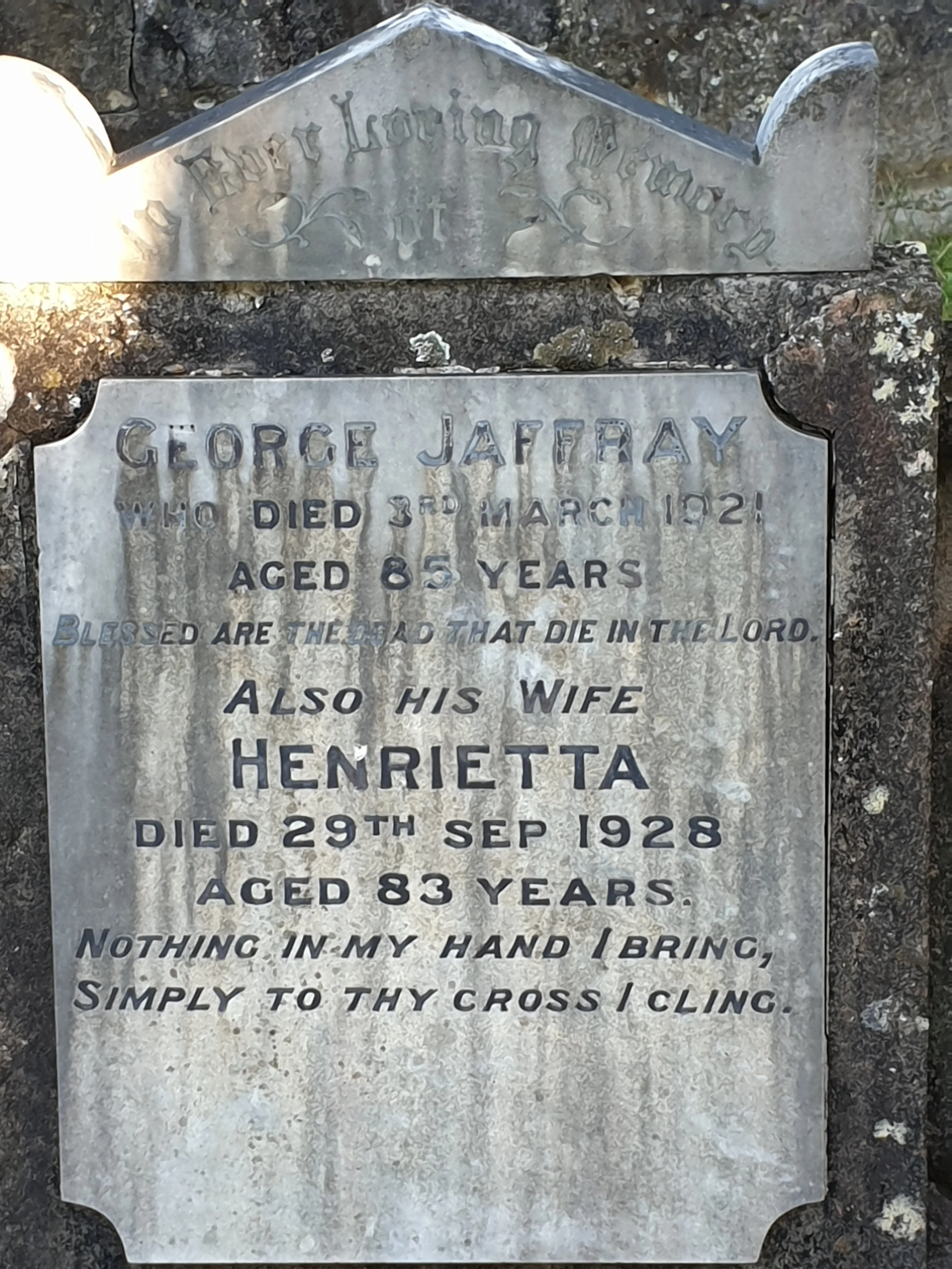
Cemetery tombstone, George & Henriette Jaffray,
St Stephen’s Anglican Church, Kurrajong NSW
The saddest graves were a family plot near the entrance. In it were buried George and Henrietta Jaffray, and four of their children.
These children all died in the same month, September 1880: Emily aged 1 year, Henrietta 7, Georgina 5, and finally William aged 10.
The cause in each case was the diphtheria infection, hard to stop before vaccination. What indescribable tragedy. (And how foolish to encourge scepticism to such a proven and safe preventative. Vaccines are why we don’t normally see it today.)
The inscriptions for each child’s young life on the tombstones were moving enough.
But more remarkable is the fact their parents’ suffering – losing these children so young – did not destroy their Christian faith, though they outlived them by many decades. I judged this by the inscriptions on the parents’ headstone, lying between those of the 4 children.
The inscription for George (died 1921, aged 85) comes from Revelation chapter 14, verse 13, which often is used to conclude a Christian burial service: “Blessed are the dead that die in the Lord.”
The inscription for Henrietta (died 1928, aged 83) reads:
“Nothing in my hand I bring,
Simply to thy cross I cling.”
Some will know the quote comes from the hymn, ‘Rock of Ages’. It’s certainly a favourite of many.
It was written in 1763 by Augustus Toplady. Tradition has it that Toplady was travelling beside the rock formation in the gorge of Burrington Combe, North Somerset, England, when he was caught in a storm. Finding shelter in a gap or ‘cleft’ in the limestone, he was struck by the image of protection within a mighty rock. And he scribbled down the initial lyrics,
“Rock of Ages, cleft for me, (*cleft = split in two)
let me hide myself in thee.”
He believed the Lord Jesus is the eternal Rock of Ages.
And it was nailed on the cross, that this ‘Rock’ was ‘cleft’ or broken, when the soldiers finally thrust a spear into his side, to check he was really dead.
As the first verse continues…
“Let the water and the blood,
From Thy riven side which flowed, (*riven = wounded)
Be of sin the double cure,
Cleanse me from its guilt and power.”
Toplady wanted us to know that Jesus is the place we can hide for protection, for forgiveness, for cleansing and hope.
The central belief of Christianity is that in the end, there is nothing we can do to save ourselves from the consequences of sin. At the ‘big picture’ level, that includes the disease and other suffering that blights our world and entered in after mankind sinned (see Genesis 3:16-19; Romans 8:18-23).
We depend entirely on the mercy of God, expressed most of all in sending Jesus to die for us.
In the wake of a cruel and deadly disease like diphtheria, Henrietta had nothing else to cling to. But though now her body lies asleep in the Lord Jesus, awaiting the day of resurrection, she testifies to the power of the cross.
Warmly in Christ,
Sandy Grant
Dean of Sydney
P.S. On a different note, here is one of the most helpful articles I’ve read all year… by a tradesman, not an academic.
“I read the entire Quran, all the Hadiths, and the Sira. Here is what I found” by A.C. Rosenthal. Two paragraphs to whet your appetite…
“I have no degree. What I have is a nail gun, ten trades, and somewhere north of 1,300 audiobooks consumed in earbuds while I worked. I started reading about Islam the same way I read about everything else: by starting with the primary sources, not the summaries, not the popular accounts, not the YouTube debates. I wanted to know what the documents actually said before I let anyone else tell me what to think about them. A carpenter tests whether a joint holds weight before trusting it. I applied the same logic to claims…
"In Islam, the founder is the standard. When you examine the primary sources and find things that trouble you, you are not finding a gap between Islam and Muhammad. You are finding Muhammad. The hadith I cited about apostasy is not a corruption of the tradition. It is from the most trusted collection in the tradition. The Banu Qurayza massacre is not a later invention. It is in the Sira, narrated with approval by the companion who participated. The marriage to Aisha is not a smear. It is defended by the tradition."