Minister’s Letter – 10 September 2026
Friends in Christ, Jesus famously taught that you are not a Christian just because you say that you are!
At the wnd of the Sermon on the Mount, in Matthew 7:21-23, Jesus says:
Not everyone who says to me, “Lord, Lord,” will enter the kingdom of heaven, but only the one who does the will of my Father who is in heaven. Many will say to me on that day, “Lord, Lord, did we not prophesy in your name and in your name drive out demons and in your name perform many miracles?” Then I will tell them plainly, “I never knew you. Away from me, you evildoers!”
Not everyone who says they are a Christian really knows Jesus. Or more importantly, the question is whether Jesus really knows them as his own.
Does it make you wonder whether you are really a Christian?
It’s not that God is confused. The Good Shepherd knows his sheep!
And the aim is not to confuse you. But we do not always see ourselves clearly.
It’s like the person with parsley on their teeth that no one wants to tell them about, or when you set off in the car at night in the city and forget to turn your headlights on but can’t figure out while people are flashing their lights at you!
…Jesus was not just talking about outright enemies, but to people who may have counted themselves as fans or friends (at least in a social media kind of way).
It’s possible to go to church and not be a true believer.
On the other hand, it’s also possible to be a real Christian and still be unsure about it.
Famously in his parable of final judgment Jesus pictures the Son of Man (i.e. himself) as King, separating the people of all the nations, one from another, as a shepherd separates the sheep from the goats (Matthew 25:31-36).
The goats were those who had failed to feed, clothe, care for or visit the King when he was hungry, cold, sick or imprisoned, whereas the sheep had ministered to the King in those ways.
There is some surprise because clearly the people being judged did not all have a chance to meet, let alone help the King personally in the flesh. They were confused about whether they had a good relationship to the King!
But Jesus says: When you did – or failed to do – those things “for the least of these brothers and sisters of mine”, you did it – or failed to do it – for me.
Two kinds of people: sheep or goat? And the last verse of Jesus’ parable says etneral life or punishment is at stake!
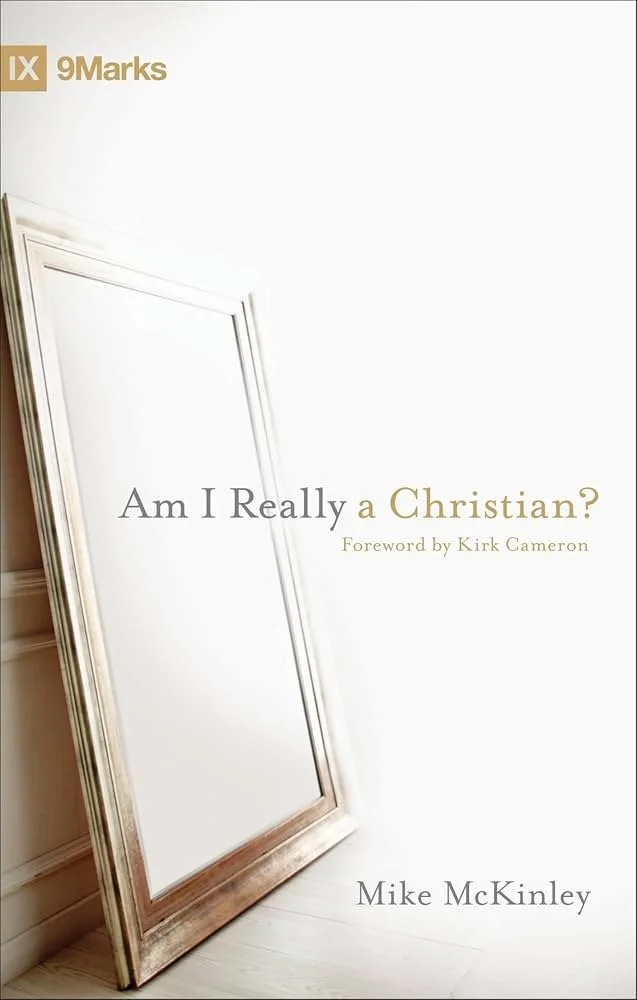
“Am I really a Christian?”
That’s what I hope to address over the next five Sunday mornings at the Cathedral, in a series is inspired by a book by Mike McKinley with the same title:
I want you to find solid, gospel-based assurance for your relationship with God, but also to puncture false presumption or pride. Our teaching will also touch on matters like repentance, obedience, and perseverance. Here are the topics in order:
Am I a Christian... if I'm not born again?
Am I a Christian... if I just like Jesus?
Am I a Christian... if I still enjoy sin?
Am I a Christian... if I don't love people?
Am I a Christian... if I fall away?
By the way, Jonathan also has a great series beginning this week for the 5pm congregation, from 1 Corinthians 11-14. It’s entitled “Gathered for Good” and looking at our church life and topics like prophecy and prayer and gender and the Lord’s Supper and manifestations of the Spirit… and love! We expect it to strengthen our life together.
I look forward to seeing you at church.
Warmly in Christ,
Sandy Grant
Dean of Sydney
P.S. I read many articles online each week, but it’s rare these days that I find ones I really feel I must share. But this week, there were two!
The first is a very promising attempt to supply believers today with a Christian ethical framework for evaluating AI use: There “10 Resolutions for AI Use” are derived from moral reflection through a gospel lens on the Ten Commandments! If you are using AI, I think you will want to read it twice.
The second picks up the topic of church discipline that I touched on from Titus 3 last week. It’s a short sermon preached on a Gospel reading from Matthew 18:15-20. It’s entitled “What They Cut Off”. The person who commended it said it combined faithful exegesis with imagination… plus an eye-popping lesson in Old Master art history. Fair call.