Tyndale New Testament at 500
Cathedral Newsletter - 26/2/2026
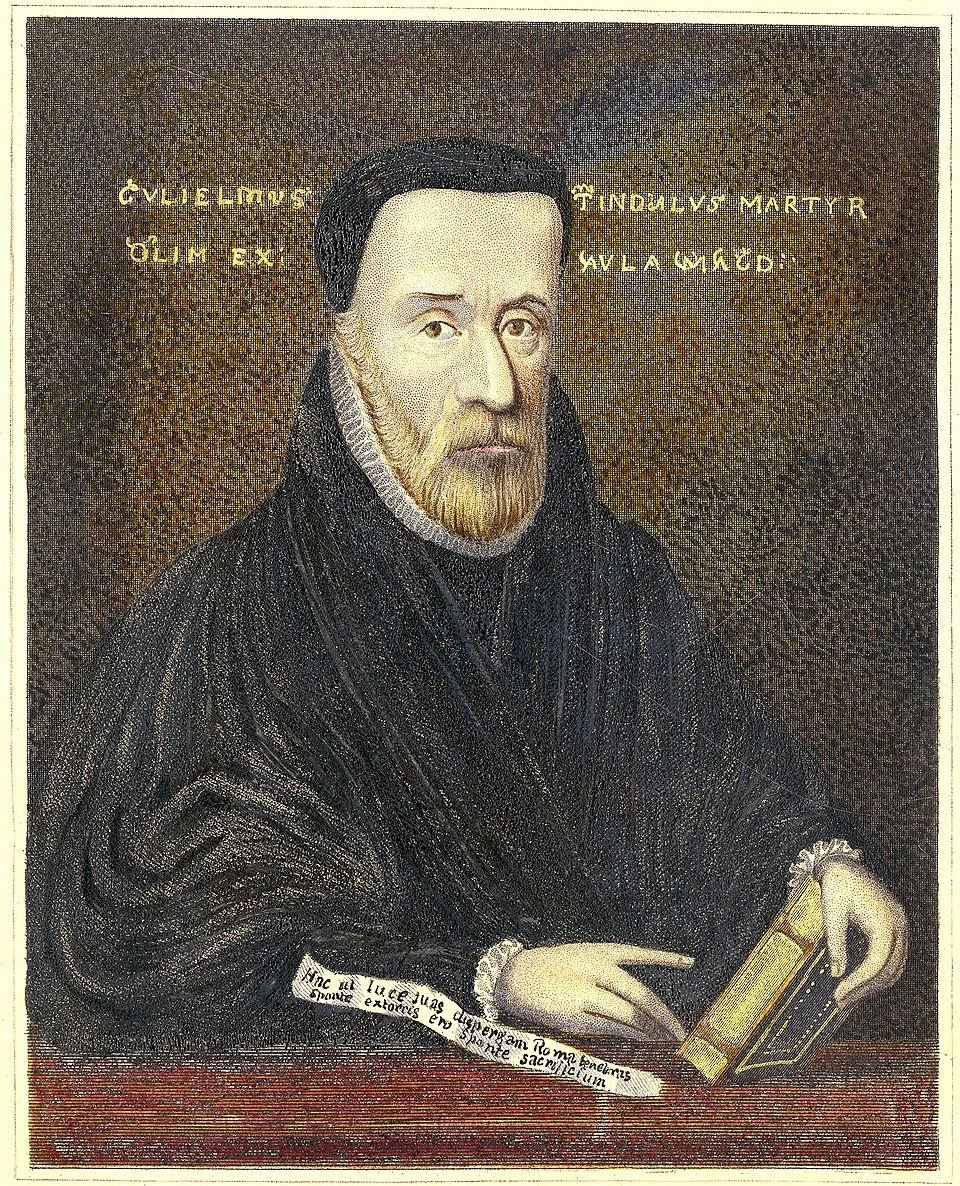
Portrait of William Tyndale
(dated 1836, courtesy Wikipedia)
Dear Friends, February 2026 marks 500 years since the publication by William Tyndale of the first New Testament translated into English from the original Greek.
Unlike some other European countries, there’d been a ban on Bibles in the vernacular English. So in England, only those who knew ancient Latin or Greek (mainly university scholars and Catholic priests) could read the Bible.
The Bishop of London refused Tyndale’s request to authorise an English translation, so he moved to the Continent to complete his work. There was obvious demand for his product, and copies of his English New Testament were smuggled into England. People really wanted to read the Bible in their own language.
His study of the Bible also convinced him of errors in Roman Catholic teaching, and he opposed of the way Henry VIII got rid of his first wife. So for his views and conduct, Henry had him hunted down. Tyndale was eventually arrested in Antwerp, tried, and in 1535, executed under the auspices of the Holy Roman Emperor and the Catholic Church.
According to John Foxe in his Book of Martyrs, Tyndale debated a clergyman who said, “We had better be without God's laws than the Pope’s”. To this Tyndale allegedly responded: “I defy the Pope and all his laws; and if God spares my life, ere many years, I will cause the boy that driveth the plow to know more of the Scriptures than thou dost!”
Tyndale was keen to communicate effectively with ordinary people and gifted the English language many words and phrases which he developed for his translation. Terminology like ‘atonement’ (‘at-one-ment’), ‘passover’, ‘scapegoat’, ‘mercy seat’, ‘salt of the earth’ (Matt 5:13), ‘the powers that be’ (Rom 13:1), ‘eat, drink and be merry’ (Luke 12:19) are all Tyndale’s, and are still used in modern English speech.
Tyndale also translated key Greek New Testament terms differently from the Church of Rome. For example, he preferred ‘congregation’ instead of ‘church’ (for ekklesia), which emphasises the gathering of believers over the hierarchy or institution. Likewise he used ‘elder’ instead of ‘priest’ (for presbuteros). And he used ‘repent’ (for metanoia) – emphasising the change of mind and direction – instead of ‘do penance’ (deeds prescribed by the Church that were supposed to help repair the damage caused by one’s sin). Modern scholars would generally agree such choices were more accurate, but these linguistic moves were part of his unpopularity with the Church.
Although Tyndale was martyred, at King Henry’s urging, it is God’s providence that soon after the reforming Archbishop, Thomas Cranmer, convinced King Henry to authorise an official English translation. Ironically, more than 80% of Tyndale’s work was included in the Great Bible that was published in 1539. And we are honoured to have a copy of the Great Bible on display in our Cathedral! Likewise his work influenced the famous King James Bible of 1611, and is felt today in many modern English translations.
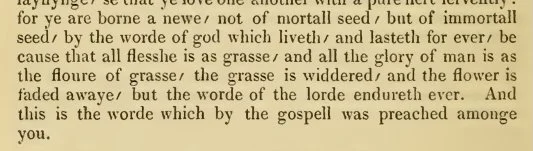
As a sample, here is Tyndale’s translation of 1 Peter 1:23-25, which honours the importance and power of the word of God!
How blessed we are to have multiple scholarly translations of the Bible into modern English. We should thank God for William Tyndale’s insight and labours.
But like newborn babies, do we crave the “pure spiritual milk” that the word provides, so that we may grow up in our salvation (2 Peter 2:2)?
For more fascinating information about William Tyndale, please read this tribute from Canon Dr Mark Thompson, Principal of Moore Theological College. Or if you prefer podcasts, Tyndale House, Cambridge, are in the middle of a mini-series on Tyndale’s life and legacy.
Warmly in Christ,
Sandy Grant
Dean of Sydney