Abide with us!
Minister’s Letter - 23 April 2026
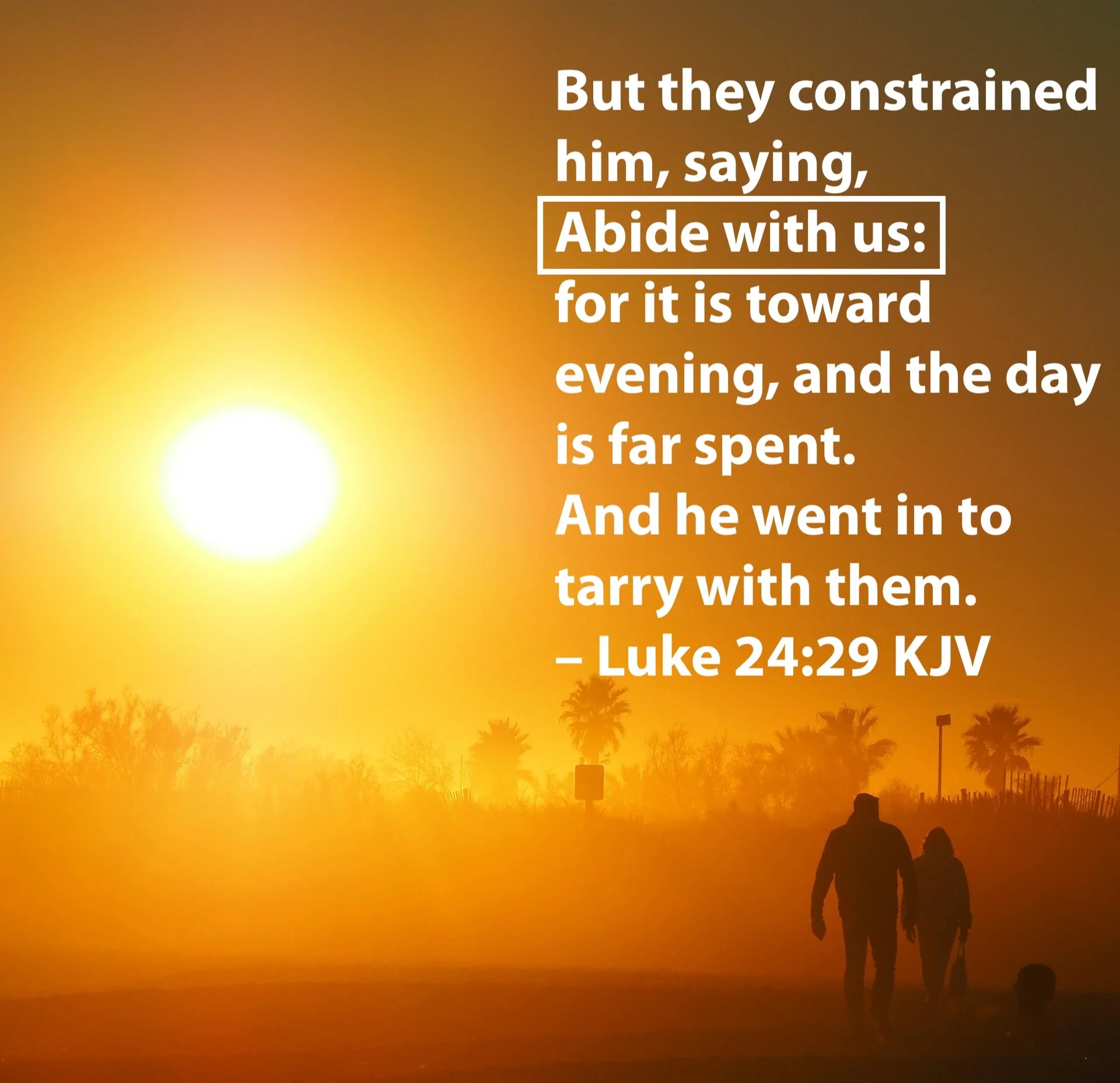
Luke 24:29 KJV; photo from Carole Hachet on Unsplash
Dear Friends, I’m looking forward to singing ‘Abide with Me’ at the Dawn Service this Saturday on Anzac Day. I’m glad they still sing it at the one I attend! We also sang it at the War Widows’ service today, and I heard a beautiful instrumental arrangement for brass and woodwind from the NSW Police Band on Wednesday.
I understand some battalions in the First World War used to sing ‘Abide with Me’ every day just before dusk, with the deepening darkness of night fall; but also just before going into battle. The second verse goes this way...
Swift to its close ebbs out life’s little day,
Earth’s joys grow dim; its glories pass away;
Change and decay in all around I see,
O thou who changest not, abide with me.
I can understand how such words might comfort with soldiers in the midst of the chaos and destruction of war, about to face death.
Today I thought I’d tell you the story behind the hymn. ‘Abide with Me’ was written by Henry Lyte.
The hymn-writer based his lyric on Luke 24:29. In the King James Version, it goes this way:
But they constrained [Jesus], saying, “Abide with us: for it is toward evening, and the day is far spent.” And he went in to tarry with them.
As Anzac Day always falls not long after Easter, it is appropriate to remind you that the context of this request to “Abide with us” was the resurrection of Jesus!
Two disciples were walking with Jesus, whom they’d thought dead. Now they realise he’s alive – no ghost – but alive and kicking, flesh and blood, back from the dead.
They were so excited as Jesus spoke to them, but since it’s late in the day, they fear their time together with him is running out. So they ask him to stay: “Abide with us.”
It’s that phrase that became the basis for the famous hymn, ‘Abide’.
Lyte intended it as a prayer, not to some vague ‘Lord’ but to Jesus – the eternal Son of God – the “help of the helpless”, the one “who changest not”.
So he meant it as a prayer to be said with confidence, not doubt.
Some verses get omitted at Dawn Services because of the hymn’s length.
But in them, Lyte spoke of God’s care for him all through his life. Even though Lyte felt himself often, quote, “rebellious and perverse”, he knew that “Thou hast not left me, oft as I left thee.” He knew Jesus was not only mighty “King of Kings”, but also “kind and good… friend of sinners”.
My research tells me Lyte also coined the saying, “It is better to wear out than to rust out”! And that described his life.
He served as a Minister for 33 years, the last 23 in a small rural fishing town, where his already poor health got worse. So illness forced him to seek warmer climates to recover. But he died, from tuberculosis, on the way to early retirement, aged 54. So Lyte knew our lives are fragile.
Indeed ‘Abide with Me’ was completed early on the day he preached his last ever sermon and retired. In that last sermon, he said this,
“I stand here among you today, as alive from the dead, [...] to impress it upon you, and induce you to prepare for that solemn hour which must come to all, by a timely acquaintance with the death of Christ.”
I guess the stark possibility of sudden death made his hymn so applicable to those entering military conflict.
Henry Lyte had one foot in the grave as he wrote ‘Abide with Me’. But he knew Jesus had conquered the grave.
And it shows in his words. He wanted people to be ready to die.
And he knew holding the cross of Christ before them could make them ready.
So he wrote ‘Abide with Me’ to help them make such a request to God.
He meant it as a prayer – not that Jesus would stay the night with us, nor just see us through a tight spot – but that he would enter our lives and abide with us always.
Warmly in Christ,
Sandy Grant
Dean of Sydney